The Foundations of Macronutrients for Strength Training
Protein synthesis triggers, carbohydrate periodisation, and the hormonal role of dietary fat — the machinery under your performance.
By Dhiren Dunraj MSc

Key Insight
“Food is not merely fuel; it is physiological instruction. What you eat dictates what you build, how fast you recover, and how long you can sustain your pursuit of the iron.”
Walk up to the bar with inadequate fuel, and the bar will expose you. Strength training is one of the most metabolically demanding pursuits a human body can undertake. It breaks down muscle tissue, depletes energy reserves, and taxes the nervous system to its limits. If you do not provide the correct macronutrients, in the right quantities, from the right sources, at the right times, you are inflicting trauma upon yourself without providing the substrate required for adaptation.
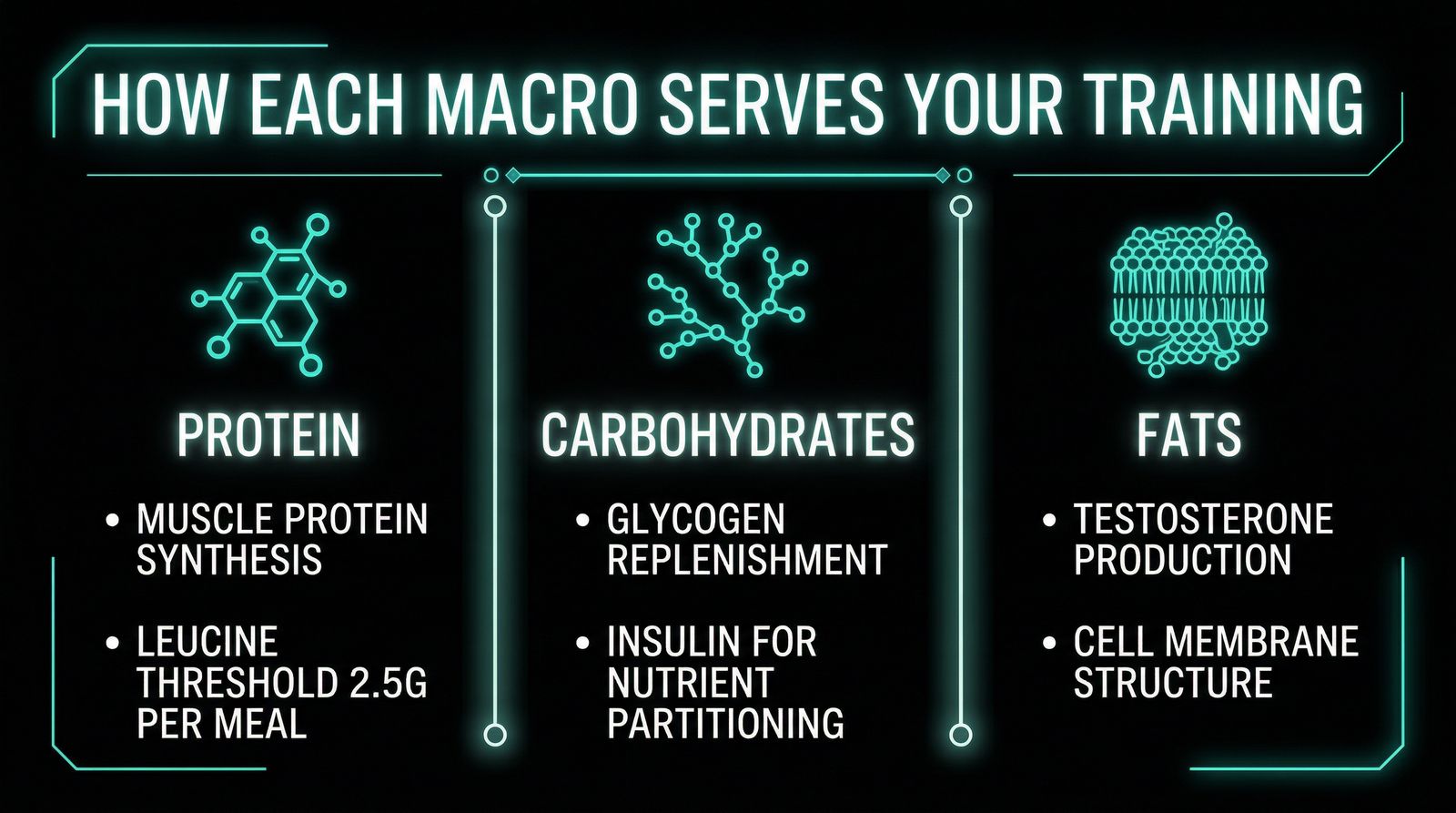
Understanding macronutrients for strength training means treating them as functional physiological tools rather than abstract numbers in a tracking app. Protein is the brick. Carbohydrates are the fuel and the recovery substrate. Fats are the hormonal and structural foundation. Every serious lifter must understand the role of each and how to manipulate them intelligently.
Protein: The Architectural Baseline of Every Adaptation
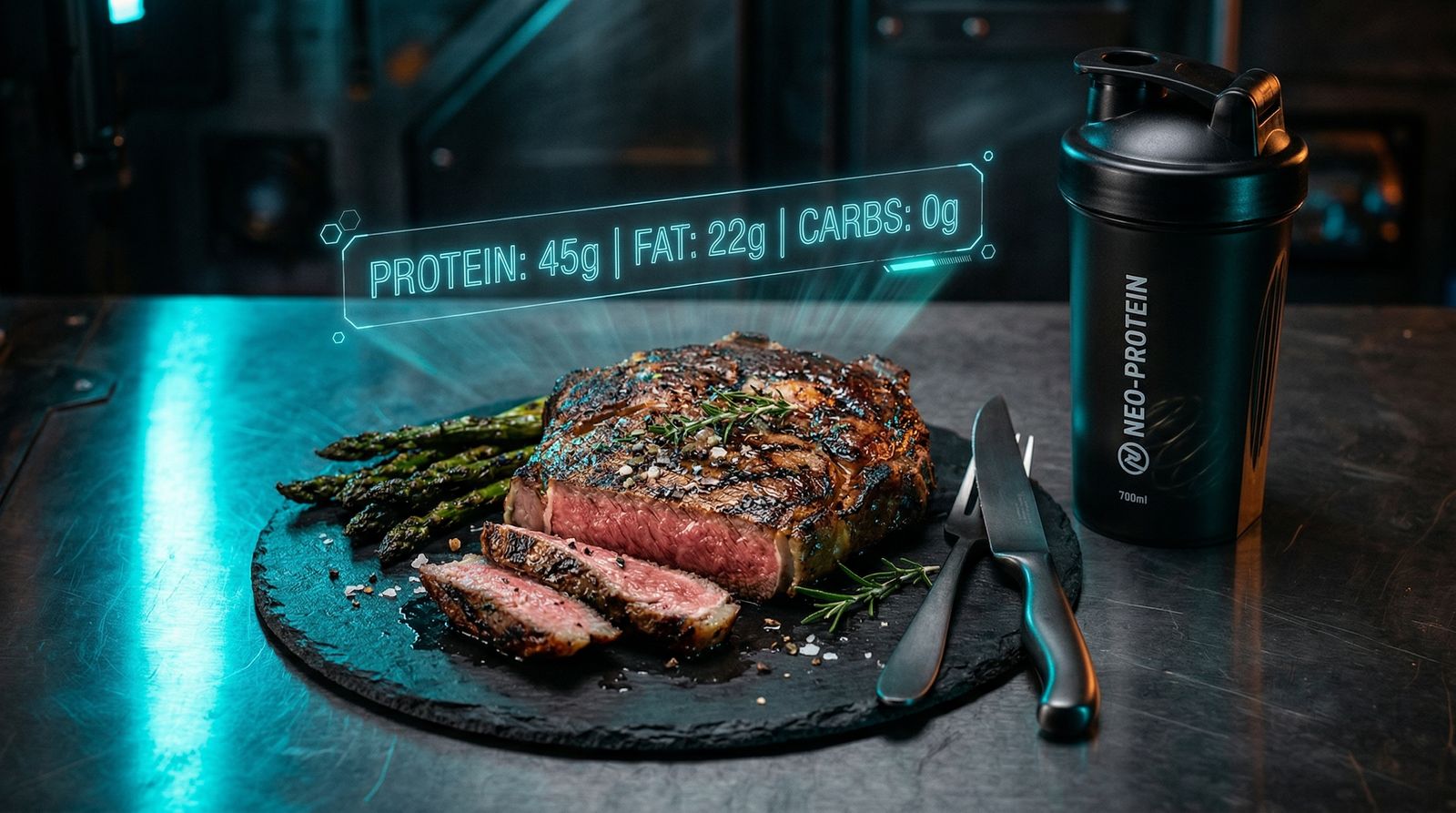
Protein is the non-negotiable variable in the strength athlete's diet. When you lift heavy, you trigger muscle protein breakdown (MPB). To grow, or simply to recover and maintain, muscle protein synthesis (MPS) must outpace breakdown across the day. The net balance between these two processes is what determines whether you are gaining, maintaining, or losing contractile tissue.
The amino acid leucine is the primary metabolic trigger for the mTOR signalling pathway, the master regulator of muscle protein synthesis (Stokes et al., 2018). You need to reach a "leucine threshold" of approximately 2-3 grams per meal to maximally stimulate MPS. In practical terms, this equates to 30-40 grams of high-quality, complete protein per meal from sources like meat, fish, eggs, or dairy. Plant-based sources with lower leucine content require larger serving sizes to achieve the same threshold.
Morton et al. (2018) produced the largest and most rigorous meta-analysis on protein supplementation and resistance training outcomes, finding that protein supplementation significantly augmented gains in muscle mass and strength, with an upper threshold of approximately 1.62 g per kg of body weight per day for maximising muscle protein accretion in most trained individuals. For athletes in a caloric deficit or those training at high volumes, this number rises substantially — to 2.2-3.0 g per kg per day — as protein is increasingly used for energy and the muscle-retention signal must be amplified.
Distribute your protein across the day. Consuming 150 grams of protein in two large meals does not produce the same MPS response as consuming the same amount across four to five meals, each providing 30-40 grams. The mTOR response is triggered by each protein-containing meal and has a refractory period. You cannot continuously stack MPS by eating protein in a single bolus.
Carbohydrates: The Glycolytic Engine of Heavy Lifting
The iron game is a glycolytic pursuit. Maximal and near-maximal efforts in the squat, bench, and deadlift rely primarily on the phosphocreatine and glycolytic energy systems — both of which draw on stored muscle glycogen as their primary fuel source. When glycogen is depleted, force production falls, motor unit recruitment suffers, and training quality collapses.
Carbohydrates are the sole direct precursor for muscle glycogen resynthesis. Dietary fat cannot replenish glycogen. Protein can, through gluconeogenesis, but at significant metabolic cost and relatively slowly. If your glycogen stores are chronically depleted because your carbohydrate intake is insufficient, your training quality will degrade across the week.
The evidence on low-carbohydrate diets in high-intensity sport is unambiguous. Burke et al. (2017) demonstrated that elite race walkers following a low-carbohydrate, high-fat diet showed impaired exercise economy during high-intensity efforts despite maintaining aerobic capacity. The muscle's ability to produce power at near-maximal intensities is directly compromised by inadequate carbohydrate availability. A powerlifter running on low glycogen is a compromised powerlifter.
Insulin is the other mechanism through which carbohydrates benefit the strength athlete. Despite its demonisation in popular nutrition discourse, insulin is the most potent anabolic hormone your body naturally produces. Following training, an insulin spike, driven by carbohydrate consumption, shuts down muscle protein breakdown and drives amino acids into muscle cells for repair. It also accelerates glycogen resynthesis. Avoiding this insulin response after training in pursuit of some abstract "insulin sensitivity" goal is physiologically counterproductive for a strength athlete who has just created the ideal anabolic window. Nutrition for Recovery: Beyond the Anabolic Window covers the post-workout nutrition window in specific detail.
Target carbohydrate intake in the range of 3-5 g per kg of body weight for most training phases, scaling upward (5-7 g per kg) during intensive hypertrophy blocks and downward (2-3 g per kg) during deliberate caloric deficit phases. The precise number is less important than ensuring carbohydrates are concentrated around your training window, the period where they will be most rapidly stored as glycogen and least likely to contribute to fat accumulation.
Dietary Fat: The Hormonal and Structural Foundation
Dietary fat occupies the most frequently misunderstood position in the strength athlete's macronutrient hierarchy. It has been demonised by public health consensus for decades and elevated by low-carbohydrate advocates as the preferred fuel for all performance. Both positions are distortions.
The critical role of dietary fat for the strength athlete is hormonal. Testosterone, the primary anabolic hormone governing muscle mass and strength adaptation, is a steroid hormone synthesised from cholesterol. Cholesterol is obtained from dietary fat and produced endogenously. When dietary fat intake falls below approximately 0.5 g per kg of body weight, testosterone production is compromised. Hamalainen et al. (1984) demonstrated that men transitioning from a high-fat to a low-fat diet showed significant reductions in serum testosterone. Volek et al. (1997) confirmed a positive relationship between dietary fat intake and testosterone levels in resistance-trained men.
An athlete cutting calories by slashing dietary fat to near-zero is undermining the primary anabolic hormone responsible for the muscle retention they are trying to protect. Maintain dietary fat at no less than 0.8-1.0 g per kg of body weight during any diet phase. This is not negotiable if hormonal health is to be preserved.
Beyond hormones, dietary fat provides fat-soluble vitamins (A, D, E, K), essential fatty acids (omega-3 and omega-6) that govern inflammatory resolution and joint health, and a high-calorie substrate for energy balance management. Omega-3 fatty acids from fatty fish and fish oil have also demonstrated direct effects on muscle protein synthesis and the resolution of training-induced inflammation, a benefit with direct performance relevance beyond general health (Slater & Phillips, 2011).
Prioritise fat sources that are rich in monounsaturated and polyunsaturated fats (olive oil, avocado, nuts, and fatty fish) alongside reasonable amounts of saturated fat from quality animal sources. Fear neither category excessively. What matters is quantity and timing: keep dietary fat away from the immediate training window, where it slows gastric emptying and delays the absorption of protein and carbohydrates.
Macronutrient Targets: Building Your Framework
The evidence base supports a practical starting framework for most strength athletes in a maintenance or building phase:
| Macronutrient | Target |
|---|---|
| Protein | 1.6-2.2 g per kg body weight (rising to 2.4-3.0 in a deficit) |
| Carbohydrates | 3-5 g per kg body weight (rising to 5-7 in high-volume phases) |
| Dietary Fat | 0.8-1.2 g per kg body weight |
These are starting points, not rigid prescriptions. Adjust based on body composition response, training performance, recovery quality, and energy levels. If your squat feels sluggish and your recovery between sessions is poor, examine your carbohydrate intake. If your libido has dropped and your strength has plateaued despite consistent training, examine your dietary fat intake. If your body composition is not moving in the desired direction, examine your total caloric intake and protein floor.
The Reality of Weight Loss: Protein Leverage vs Insulin vs Calorie Tracking provides a deeper analysis of how these macronutrient targets interact with the different models of fat loss, and why protein remains the master lever regardless of which dietary philosophy you favour.
The iron does not care which nutritional camp you belong to. It cares whether your muscles had the protein to synthesise new tissue, the glycogen to fuel maximum force production, and the dietary fat to maintain the hormonal environment required for adaptation. Provide all three, in the right amounts, at the right times, and the adaptation follows.
Key Takeaways
- Protein drives muscle protein synthesis via the mTOR pathway; hit a leucine threshold of 2-3 g per meal, achieved through 30-40 g of high-quality complete protein, and distribute across 4-5 daily meals.
- Heavy lifting is glycolytic — muscle glycogen is the primary fuel, and carbohydrates are the only direct precursor for glycogen resynthesis; depleted glycogen directly impairs maximal force production.
- Dietary fat below 0.5-0.8 g per kg of body weight compromises testosterone synthesis; maintaining a fat floor is non-negotiable for hormonal health in any diet phase.
- Time carbohydrates and protein around the training window for maximum anabolic signalling; keep fats away from the immediate peri-workout period to avoid slowing absorption.
- A high protein intake protects lean mass during a caloric deficit by maintaining the muscle protein synthesis signal in a catabolic environment.
Put It Into Practice
This week: Track your protein intake meticulously for seven days. Ensure you are hitting a minimum of 2.0 g per kg of body weight, distributed across at least four meals. Record whether each meal reaches approximately 30-40 g of protein to hit your leucine threshold.
This training block: Restructure your carbohydrate intake around your training sessions. Move the majority of your daily carbohydrates to the meal before and the meal immediately after your heaviest session. Reduce carbohydrate intake at all other meals and replace with protein and fat. Assess whether your training performance and recovery improve within two weeks.
Long term: Stop viewing food as morally "good" or "bad." View every meal through the single lens of physiological utility: is this meal driving muscle protein synthesis, fuelling performance, supporting hormone production, or aiding recovery? Make decisions from that framework, and the correct choices become obvious.
Analysed by FINAL FORM AI. Your form, perfected.
References
- Morton, R. W., et al. (2018). A systematic review, meta-analysis and meta-regression of the effect of protein supplementation on resistance training-induced gains in muscle mass and strength in healthy adults. British Journal of Sports Medicine, 52(6), 376-384. PMID: 28698222
- Stokes, T., et al. (2018). Recent perspectives regarding the role of dietary protein for the promotion of muscle hypertrophy with resistance exercise training. Nutrients, 10(2), 180. PMID: 29414855
- Slater, G., & Phillips, S. M. (2011). Nutrition guidelines for strength sports: sprinting, weightlifting, throwing events, and bodybuilding. Journal of Sports Sciences, 29(sup1), S67-S77. PMID: 21660839
- Burke, L. M., et al. (2017). Low carbohydrate, high fat diet impairs exercise economy and negates the performance benefit from intensified training in elite race walkers. Journal of Physiology, 595(9), 2785-2807.
- Hamalainen, E., et al. (1984). Diet and serum sex hormones in healthy men. Journal of Steroid Biochemistry, 20(1), 459-464. PMID: 6538617
- Volek, J. S., et al. (1997). Testosterone and cortisol in relationship to dietary nutrients and resistance exercise. Journal of Applied Physiology, 82(1), 49-54. PMID: 9029197
- Jäger, R., Kerksick, C. M., Campbell, B. I., et al. (2017). International Society of Sports Nutrition Position Stand: protein and exercise. Journal of the International Society of Sports Nutrition, 14, 20. PMID: 28642676
- Phillips, S. M., & Van Loon, L. J. (2011). Dietary protein for athletes: from requirements to optimum adaptation. Journal of Sports Sciences, 29(sup1), S29-S38. PMID: 22150425
- Kerksick, C. M., Wilborn, C. D., Roberts, M. D., et al. (2018). ISSN exercise & sports nutrition review update: research & recommendations. Journal of the International Society of Sports Nutrition, 15, 38. PMID: 30068354
- Macnaughton, L. S., Wardle, S. L., Witard, O. C., et al. (2016). The response of muscle protein synthesis following whole-body resistance exercise is greater following 40 g than 20 g of ingested whey protein. Physiological Reports, 4(15), e12893. PMID: 27511985