Nutrition for Recovery: Beyond the Anabolic Window
The post-workout window is real — but narrower than the supplement industry wants you to believe. Here is what actually drives adaptation.
By Dhiren Dunraj MSc

Key Insight
“You do not grow in the gym. You grow in your sleep, fed by what you ate in the hours that followed your final set.”
The iron damages. Nutrition repairs. When you complete a heavy training session, you have applied a potent mechanical and metabolic stressor to your musculoskeletal system. Muscle fibres have been disrupted. Glycogen stores have been depleted. The central nervous system has been taxed. The hormonal environment has been transiently shifted toward catabolism. The adaptation (the growth, the strength increase, the neural refinement) does not happen in the gym. It happens in the subsequent 24-72 hours of recovery, and it is entirely dependent on whether you provide the correct substrate.
Nutrition for recovery is as important as the training programme itself. Two athletes performing identical training with identical genetics will diverge in their adaptations within weeks if one is managing recovery nutrition intelligently and the other is not. The stimulus is the same. The adaptation is determined by what happens next.
The Anabolic Window: Wider Than You Think, Still Important
For decades, the 30-minute post-workout "anabolic window" was treated as doctrine. Miss it, and your workout was wasted. This created an industry of whey protein shakes consumed with desperate urgency in gym car parks before the metabolic clock expired.
Schoenfeld and Aragon (2018) reviewed the evidence on post-exercise nutrient timing and concluded that the anabolic window is far wider than 30 minutes, particularly when a pre-workout meal containing protein has been consumed. In trained individuals with adequate pre-training nutrition, the window extends to several hours post-exercise. The total daily protein intake and distribution across the day ultimately matters more than the precise timing of any single meal.
There are caveats for the strength athlete. If you train in a fasted state, or if your last meal was four or more hours before training, the post-workout window contracts significantly. Your body is already in a catabolic state before the session ends. If you train fasted or near-fasted, consume protein and carbohydrates within 60 minutes of finishing your final working set.
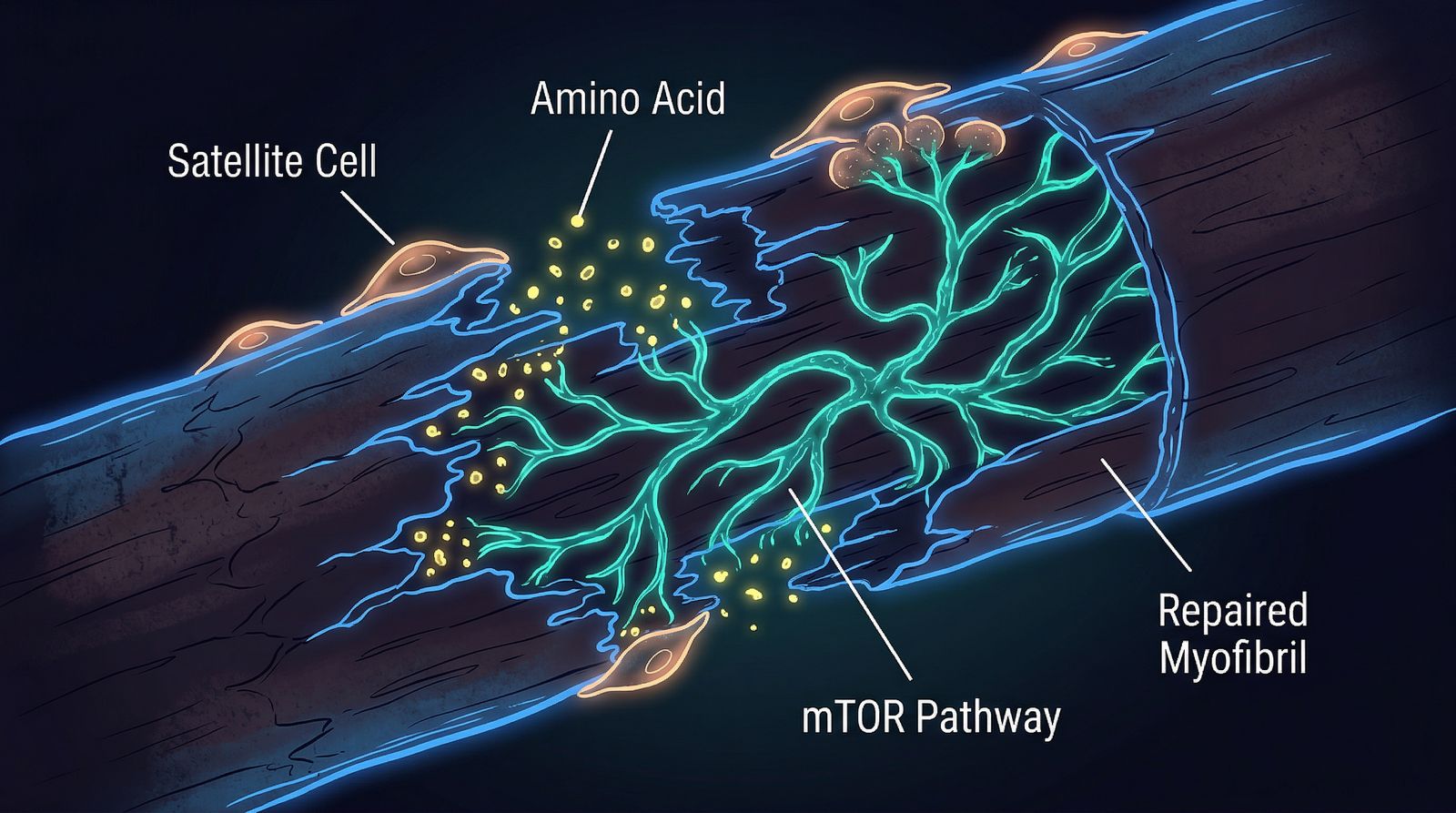
More instructive than the window debate is the work by Areta et al. (2013), who studied how protein distribution during a 12-hour post-exercise recovery period affected muscle protein synthesis. Subjects consuming 20 g of whey protein every three hours showed significantly greater myofibrillar protein synthesis than those consuming fewer, larger servings. The finding reinforces the distribution principle: repeated stimulation of the mTOR pathway through evenly spaced protein doses drives superior recovery outcomes than front- or back-loading protein consumption.
The Foundations of Macronutrients for Strength Athletes covers the leucine threshold and mTOR mechanism in full detail, the same mechanism that governs both training adaptations and recovery signalling.
The post-workout meal itself should contain 30-40 g of high-quality protein alongside 50-100 g of fast-digesting carbohydrates. The carbohydrates perform a dual function: they spike insulin, which is the most potent endogenous suppressor of muscle protein breakdown, and they initiate glycogen resynthesis at the highest rate. Immediately post-exercise, the GLUT-4 transporter is at its most active, and glucose is cleared from the bloodstream into muscle with exceptional efficiency.
Sleep: The Most Powerful Recovery Tool You Already Own
No supplement, no recovery modality, no nutritional protocol out-recovers sleep. It is the single most powerful recovery intervention available to the strength athlete, and it is free.
During deep slow-wave sleep, the pituitary gland releases the majority of its daily human growth hormone (HGH) output. Van Cauter et al. (2000) demonstrated that the largest HGH pulses in healthy men occur within the first few hours of sleep, specifically during slow-wave sleep stages. HGH drives cellular repair, protein synthesis, and fat metabolism. Chronic sleep restriction or fragmented sleep architecture (caused by stress, poor sleep hygiene, or irregular schedules) directly impairs this hormonal cascade.
The cortisol cost of sleep deprivation is equally damaging. Cortisol is a glucocorticoid hormone that, at chronically elevated levels, actively promotes muscle protein breakdown and drives fat storage, particularly in the visceral compartment. Halson (2014) reviewed the evidence on sleep in elite athletes and found that sleep restriction consistently impaired performance, mood, and recovery markers. Athletes who consistently sleep less than seven hours per night are likely to recover and adapt worse than those averaging eight or more.
Nutrition can support sleep quality in three ways.
Carbohydrates before bed can improve sleep latency and quality by raising brain tryptophan availability. Tryptophan is the precursor to serotonin, which converts to melatonin, the primary sleep-onset hormone. A small serving of complex carbohydrates 1-2 hours before sleep has modest but real evidence for improving sleep onset in some individuals.
Casein protein at night provides a slow-release amino acid supply during the overnight fasting period, maintaining positive muscle protein balance throughout sleep. Research has shown that 30-40 g of casein before bed elevates overnight MPS without disrupting sleep quality or fat loss outcomes.
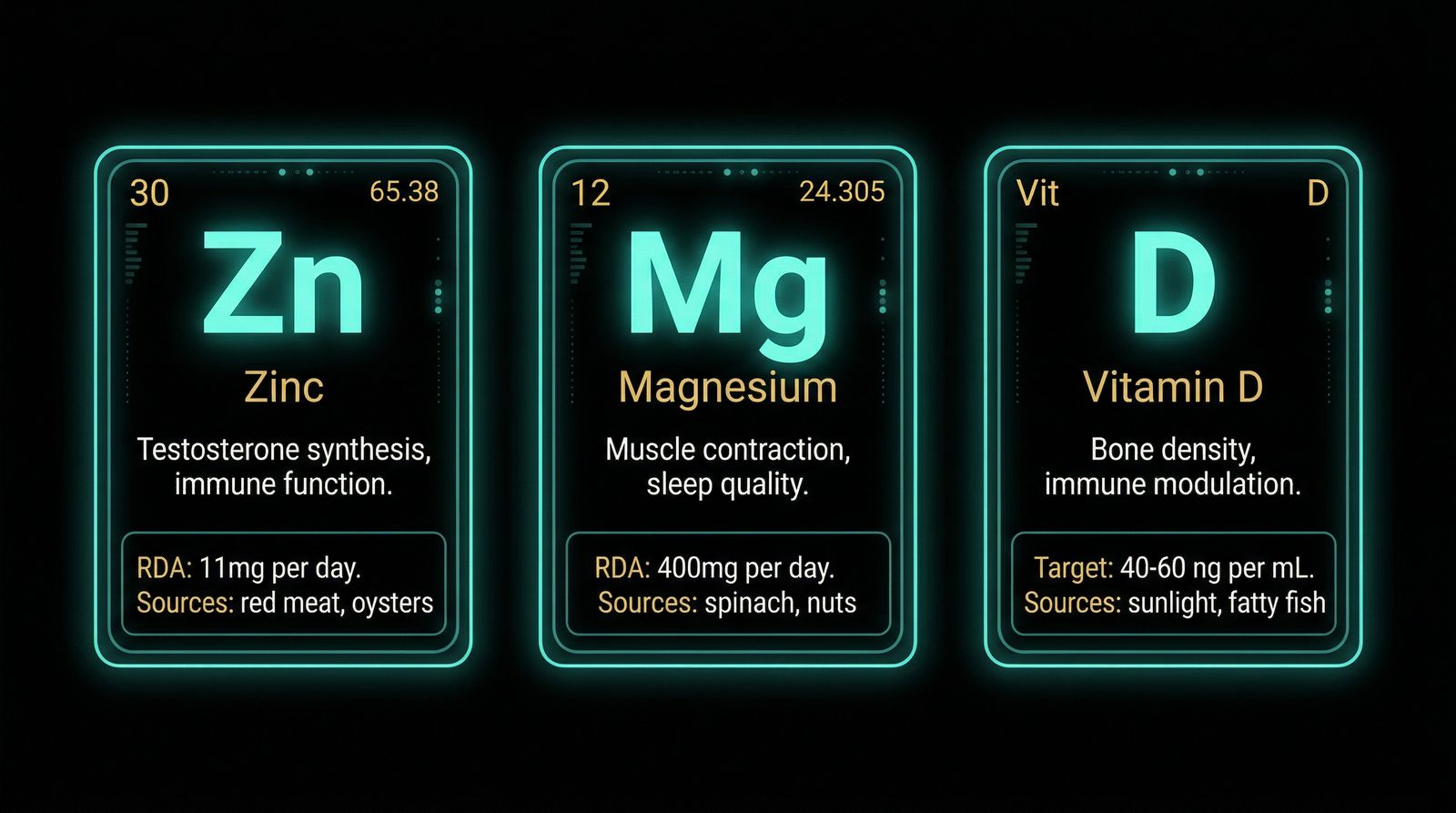
Magnesium is the most important sleep-supporting micronutrient for athletes. Intense training depletes magnesium through sweat. Deficiency impairs sleep quality through effects on GABA receptor activity. GABA is the primary inhibitory neurotransmitter that promotes sleep onset. Supplementing 200-400 mg of magnesium glycinate or magnesium bisglycinate before bed is one of the most consistently effective sleep interventions for chronically trained individuals.
Micronutrients: The Recovery System's Infrastructure
The strength athlete is at significantly higher risk of micronutrient deficiency than the general population, due to the elevated demands of intense training and the targeted nature of most performance diets. Three micronutrients deserve specific attention.
Zinc is depleted significantly during intense exercise. It is a cofactor in hundreds of enzymatic reactions, including those involved in protein synthesis, testosterone production, and immune function. Zinc deficiency impairs recovery, suppresses immune function, and contributes to testosterone decline. Oysters, red meat, and pumpkin seeds are the highest food sources. Athletes in regions with zinc-poor soils or those on low-meat diets should consider supplementation at 10-15 mg daily.
Magnesium was covered above in the context of sleep, but its role extends into every aspect of recovery. It is a cofactor for ATP production, the universal energy currency. Every time you hydrolyse ATP during a heavy set, magnesium is required in the cycle. Low magnesium impairs muscular function, reduces ATP regeneration capacity, and degrades training quality from the inside out.
Vitamin D functions more like a hormone than a vitamin. Vitamin D receptors are expressed in muscle tissue, bone, and immune cells. Deficiency, endemic in populations living above 35 degrees latitude or spending limited time outdoors, is directly associated with impaired muscle function, reduced testosterone, and increased injury risk. Strength athletes should target serum 25-hydroxyvitamin D levels of at least 40-60 ng/mL, which typically requires supplementation of 2000-4000 IU daily, particularly during winter months in northern climates.
Creatine Monohydrate: The Non-Negotiable Supplement
If there is one supplement that every strength athlete should take without exception, it is creatine monohydrate. It is the most extensively researched performance supplement in sports nutrition history, with over 30 years of clinical evidence (Kreider et al., 2017).
Creatine saturates the phosphocreatine pool in muscle cells, dramatically accelerating ATP regeneration during maximal efforts. More phosphocreatine means more rapid recovery between maximal force contractions: within a set, between sets, and between sessions. It also functions as an osmolyte, drawing water into the muscle cell and creating an anabolic intracellular environment.
Beyond performance, creatine may support muscle protein synthesis, with some evidence for enhanced anabolic signalling independent of its phosphocreatine-related function. Kreider et al. (2017) summarised decades of evidence confirming creatine's safety, with no adverse effects documented at standard doses in healthy populations across multi-year supplementation protocols.
The dose is simple: five grams per day, taken consistently. A loading phase (20 g per day for five days) saturates the pool faster but is not required. Full saturation is achieved in approximately four weeks at the maintenance dose. Timing is irrelevant; take it whenever you take your other supplements. The Intelligent Deficit: Preserving Strength While Cutting addresses whether creatine should be maintained during a caloric deficit. The answer is yes.
Key Takeaways
- The post-workout anabolic window is wider than 30 minutes for athletes who trained fed, but narrows significantly for fasted training — prioritise a 30-40 g protein and 50-100 g carbohydrate meal within 60 minutes in either case.
- Protein distribution across the day matters more than any individual meal's timing — aim for 30-40 g high-quality protein every 3-4 hours to sustain mTOR activation.
- Sleep is the highest-leverage recovery intervention available; HGH release occurs during slow-wave sleep and chronic restriction elevates catabolic cortisol, directly impairing adaptation.
- Zinc, magnesium, and Vitamin D are the three micronutrients most commonly depleted in strength athletes and most directly relevant to recovery, hormone production, and training capacity.
- Creatine monohydrate at 5 g per day is the most evidence-supported performance supplement available, with decades of safety and efficacy data and no requirements for loading or cycling.
Put It Into Practice
This week: Begin 5 g of creatine monohydrate daily. If you already supplement creatine, audit your sleep: track your total sleep time for seven days. If you are consistently under seven hours, identify and eliminate one behavioural cause — screen time, inconsistent bedtime, or caffeine timing.
This training block: Audit your post-workout nutrition window. Ensure you consume 30-40 g protein alongside a carbohydrate source within 60 minutes of your final working set. If you are training early in the morning fasted, this is especially critical. Prepare the meal in advance rather than leaving it to chance.
Long term: Treat sleep with the same deliberate aggression you apply to your training. Set a consistent sleep window, make your environment dark and cool, and protect it from encroachment. Every hour of quality sleep you add is a training performance enhancement that compounds across months and years of adaptation.
Analysed by FINAL FORM AI. Your form, perfected.
References
- Schoenfeld, B. J., & Aragon, A. A. (2018). Is there a postexercise anabolic window of opportunity for nutrient consumption? Clearing up controversies. Journal of Orthopaedic and Sports Physical Therapy, 48(12), 911-914.
- Areta, J. L., et al. (2013). Timing and distribution of protein ingestion during prolonged recovery from resistance exercise alters myofibrillar protein synthesis. Journal of Physiology, 591(9), 2319-2331. PMID: 23459753
- Kreider, R. B., et al. (2017). International Society of Sports Nutrition position stand: safety and efficacy of creatine supplementation in exercise, sport, and medicine. Journal of the International Society of Sports Nutrition, 14(1), 18. PMID: 28615996
- Van Cauter, E., et al. (2000). Age-related changes in slow wave sleep and REM sleep and relationship with growth hormone and cortisol levels in healthy men. JAMA, 284(7), 861-868.
- Halson, S. L. (2014). Sleep in elite athletes and nutritional interventions to enhance sleep. Sports Medicine, 44(Suppl 1), 13-23. PMID: 24791913
- Aragon, A. A., & Schoenfeld, B. J. (2013). Nutrient timing revisited: is there a post-exercise anabolic window? Journal of the International Society of Sports Nutrition, 10, 5. PMID: 23360586
- Jentjens, R., & Jeukendrup, A. (2003). Determinants of post-exercise glycogen synthesis during short-term recovery. Sports Medicine, 33(2), 117-144. PMID: 12617691
- Walsh, N. P., Halson, S. L., Sargent, C., et al. (2021). Sleep and the athlete: narrative review and 2021 expert consensus recommendations. British Journal of Sports Medicine, 55(7), 356-368. PMID: 33144349
- Vitale, K. C., Owens, R., Hopkins, S. R., & Malhotra, A. (2019). Sleep hygiene for optimizing recovery in athletes: review and recommendations. International Journal of Sports Medicine, 40(8), 535-543. PMID: 31288293
- Macnaughton, L. S., Wardle, S. L., Witard, O. C., et al. (2016). The response of muscle protein synthesis following whole-body resistance exercise is greater following 40 g than 20 g of ingested whey protein. Physiological Reports, 4(15), e12893. PMID: 27511985